Recipe Costing Software for Makers

Stop guessing what your recipes cost to make

Craftybase calculates your true cost per unit from your ingredients — oils, wax, flour, fragrance, whatever you make with — updates automatically when prices change, and keeps your COGS ready for tax time. So you always know your real margin before you set a price.

4.6/5 from 240+ reviews on Capterra

Used by 10,000+ makers — soap, candle, food, cosmetics, jewelry & more

Recipe cost breakdown

Classic Shortbread · 24 units

🧁
Flour 500g$1.10
Butter 250g$2.80
Caster sugar 125g$0.40
Vanilla extract 5ml$0.50
Labor & overhead$12.00
Cost per unit$0.70
Selling price$2.50
72% margin

Profit per unit: $1.80  ·  Per batch: $43.20

Costs recalculate automatically when ingredient prices change
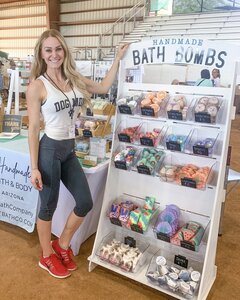
Tiffany Jensen, Desert Bath Company

"Craftybase has given me the tools & resources to accurately track my materials, recipes, and inventory. I love that I can build out my recipes and make adjustments to see my cost in real time."

Tiffany Jensen — Desert Bath Company

Verified Craftybase Customer

Build recipes, see costs instantly

Enter your ingredients and the quantities your recipe uses. Craftybase does the rest — calculating your cost per batch and per unit automatically, for any batch size.

  • Total ingredient cost per batch
  • Cost per unit for any batch size
  • Labor time and overhead included in the calculation
  • Suggested wholesale and retail prices based on your actual costs
Food recipe bill of materials costing in Craftybase

Costs update when ingredient prices change
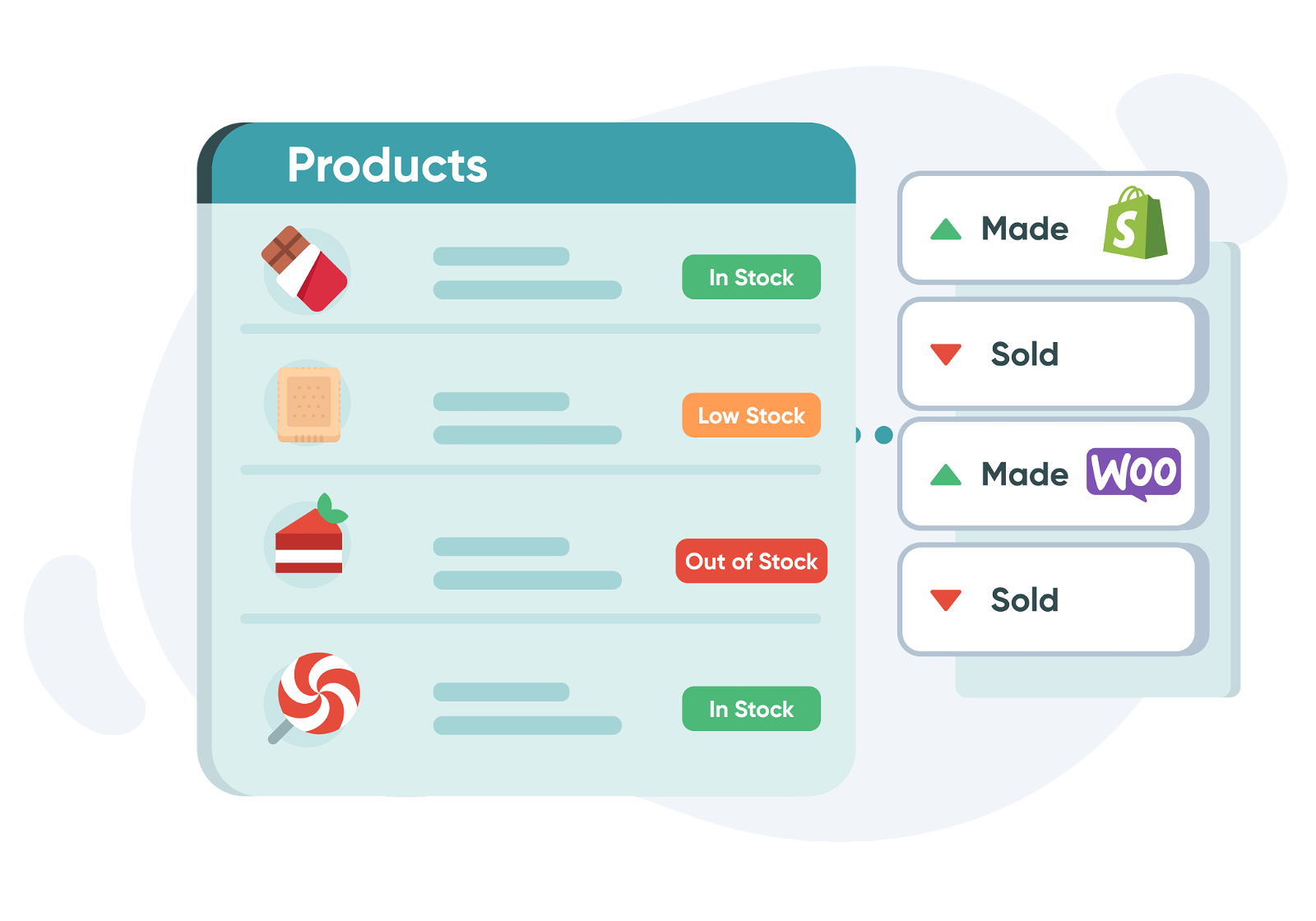
When you restock and pay a different price for an ingredient, your recipe costs recalculate automatically. Know immediately which products need a price adjustment to protect your margins — without touching a single formula.

Butter went up. Fragrance oils spiked. Wax doubled. This is where spreadsheets fall apart. In Craftybase, it just happens.

Food ingredient cost tracking that updates recipe costs automatically

Price with confidence, not guesswork

Craftybase's pricing guidance gives you wholesale and retail price suggestions based on your actual costs. Factor in your time, overhead, and target margin — and know with certainty that every sale is profitable.

No more copying what competitors charge and hoping for the best.

"Am I charging enough?" Stop wondering. The answer is right there.

Pricing guidance based on food recipe costs in Craftybase

COGS for tax time — already calculated

Every time you manufacture, Craftybase records it. At tax time, your cost of goods sold is already there — broken down by product, period, and channel. Run the report, hand it to your accountant, move on.

Schedule C ready. No spreadsheet archaeology required.

COGS report for tax time in Craftybase

Stop guessing what your recipes cost to make

Start your free trial today — no credit card required, set up in minutes.

Craftybase connects everywhere you sell

Import orders automatically and sync stock levels across all your channels — so you never oversell or run out of stock.

ShopifyEtsyWooCommerceAmazonSquarePayPalFaireWixSquarespaceQuickBooksShopifyEtsyWooCommerceAmazonSquarePayPalFaireWixSquarespaceQuickBooks

Who is Craftybase recipe costing for?

If you manufacture products from raw ingredients and need to know what they actually cost — not a rough guess — Craftybase was built for you.

🧴

Soap makers, candle makers & formulators

Track oils, waxes, fragrance oils, and lye down to the ounce. See exactly what each bar, candle, or serum costs to make — and when rising ingredient prices are squeezing your margins.

🧁

Food makers & bakers

Bakeries, hot sauce brands, jam and preserves producers, confectionery makers, chocolatiers. Track flour, butter, extracts, and packaging — every batch has a COGS, Craftybase calculates it automatically.

📋

Any maker with a Bill of Materials

If you write down a list of materials, quantities, and steps to make a finished product, you're already working with a BOM. Craftybase automates the cost math from that list — whatever you make with.

BakeriesSoap MakersCandle MakersSkincare FormulatorsHot Sauce & PreservesConfectioneryCosmeticsJewelry Makers

Real makers. Real costs. Real results.

"Craftybase helps me keep my sales automatically entered into my system so I can get on with the fun part: the creative products I make!"

Kitty, Oh Crumbs Bakery
Kitty — Oh Crumbs Bakery
Verified Craftybase Customer

"Knowing exactly what my products cost to produce allows me to price them appropriately to ensure an accurate profit margin."

Lacy, Sassy Turtle Soapworks
Lacy — Sassy Turtle Soapworks
Verified Craftybase Customer

"Without Craftybase I would not be able to run my business properly. It tracks all my ingredients to the gramme so I can confidently price my products knowing everything is correct."

Lorraine — Lorraine's Cakery
Verified Craftybase Customer

"It makes tracking my expenses, orders, and COGS so easy! Also saved me hours of work at tax time, eliminating the need to do countless manual calculations."

Emma, The Back Lot
Emma — The Back Lot
Verified Craftybase Customer

Comparing recipe costing options?

Our guide breaks down the key differences between dedicated recipe costing software, general inventory tools, and spreadsheets.

Read the comparison guide →

Frequently asked questions

What is recipe costing software?

Recipe costing software calculates the material cost of a finished product from the ingredients in its recipe — giving you a true cost per unit so you can price profitably. You enter your recipe (ingredients, quantities, and batch size) and the software multiplies quantities by your current ingredient costs to produce a total cost per batch and per unit. Unlike general inventory tools, recipe costing software understands that you manufacture from raw materials, and tracks costs at that level. Craftybase is purpose-built for small-batch makers who need this visibility without enterprise-level complexity.

How does Craftybase calculate recipe costs?

Craftybase uses the unit cost of each material you've purchased to calculate recipe costs. When you record a material purchase, Craftybase tracks the price you paid per unit (gram, ounce, litre, etc.). When you add that material to a recipe, Craftybase multiplies the quantity the recipe uses by the current unit cost — and sums across all ingredients to give you a total batch cost and a cost per unit. You can also add labor time and overhead to get a fully loaded cost. The result is your true cost to make one unit, ready for pricing guidance calculations.

Does Craftybase update recipe costs when ingredient prices change?

Yes — this is one of the most important things Craftybase does. When you record a new purchase of an ingredient at a different price, your recipe costs recalculate automatically. You don't need to open every formula and update it manually. Craftybase maintains a full purchase history for each material, so you always know the current cost and how it's changed over time. For makers dealing with fluctuating raw material prices — fragrance oils, beeswax, food ingredients — this is a significant operational advantage over spreadsheets. See our guide on how to reprice when ingredient costs rise for a step-by-step walkthrough.

Can Craftybase calculate COGS for tax time?

Yes. Every time you record a manufacture in Craftybase, the material costs are tracked and attributed to the products you made. When you sell those products, the cost of goods sold is calculated automatically. At tax time, you run the COGS report for your reporting period — it's already broken down by product, date, and channel, and is ready to hand to your accountant or enter on Schedule C. Many makers describe this as one of the biggest time-savers Craftybase provides — no more reverse-engineering your costs from receipts at the end of the year.

Is Craftybase good recipe costing software for food makers?

Yes — Craftybase is used by bakeries, hot sauce brands, jam and preserves producers, confectionery makers, and other food businesses. It handles ingredients tracked by weight, volume, or unit, supports any batch size, and connects with Shopify, Etsy, and WooCommerce for automatic order imports. Food makers particularly value the COGS reporting for tax purposes and the automatic cost recalculation when food ingredient prices fluctuate. If you're a food maker comparing options, our recipe costing software comparison guide walks through how Craftybase compares to other tools on the market.

Who is Craftybase for?

Craftybase is recipe costing and inventory software for small-batch makers who manufacture products from raw ingredients — built for product businesses with 1 to 10 people, not enterprise manufacturers or restaurant chains.

Craftybase works well for:

Craftybase is NOT designed for:

  • Restaurants and commercial kitchens — Craftybase does not handle table management, menu boards, POS systems, or restaurant inventory workflows
  • Large manufacturers — Craftybase is designed for businesses with 1–10 people; it does not include MRP scheduling, production floor management, or multi-warehouse ERP features
  • Pure retailers — if you resell products you don't make, Craftybase's recipe-based inventory model is not the right fit
  • Service businesses — Craftybase is for physical product makers; it does not track time billing or service-based revenue

Ready to know your true recipe costs?

Join 10,000+ soap makers, candle makers, bakers, and formulators who've stopped guessing and started pricing with confidence.

Start knowing my costs →

No credit card required • Plans from $24/mo